
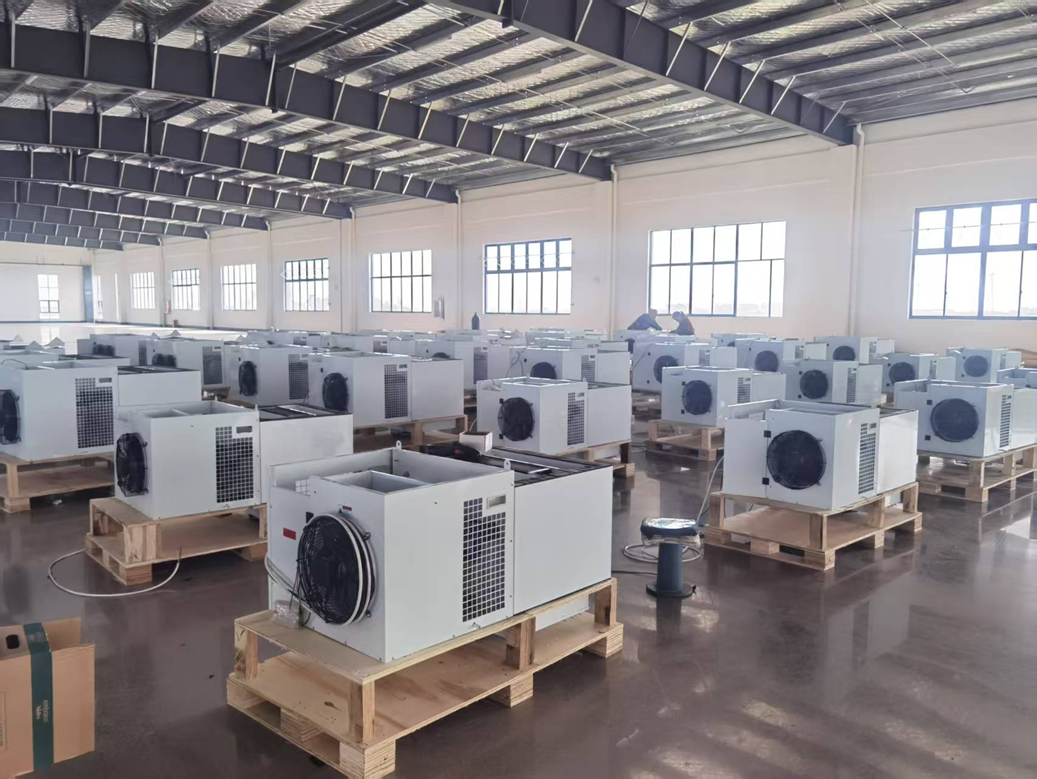
For a refrigeration distributor, a supplier evaluation should connect a specific model to a real customer application. Certification, technical documentation, installation fit, parts support and written commercial terms are useful starting points for that review.
ICEBEAR—Changzhou Ice Bear Heating and Cooling Co., Ltd.—is based in Changzhou, China. Its product range includes monoblock refrigeration units, split refrigeration units, insulated panels and cold-room doors. North America is a core market for the business.
This guide is intended for refrigeration equipment distributors, walk-in contractors and foodservice equipment suppliers considering an additional source of supply.
Start with one relevant application
Select a project or product category that already fits your customer base. Define the operating temperature, typical load, electrical supply, installation setting and expected order pattern.
A contractor evaluating equipment for replacement projects may need different mounting and service information from a distributor introducing a new product line. A useful supplier discussion begins with those differences.
Verify the exact product being offered
Ask for a model-specific technical sheet and corresponding certification references. Compare the quoted model designation with the listing and nameplate information, including suffixes.
For ICEBEAR monoblock products, use the ETL certification and verification page. Do not apply the certification scope of one product family to another.
Agree on a technical document package
Before placing an order, identify which documents are needed for your review and your installer’s work:
- Rated cooling capacity and stated operating conditions.
- Electrical requirements and the applicable wiring diagram.
- Mounting dimensions, clearances and drainage instructions.
- Component identification and service information.
- Model-specific certification documentation.
Confirm the availability and version of each document. This helps prevent a sales description from becoming the only installation reference.
Establish parts and service responsibilities
Clarify who diagnoses faults, who identifies replacement parts, and who handles local repair work. Agree on what information is needed to investigate a service issue—for example the model, serial number, installation details and technician’s findings.
Discuss frequently needed parts and any special components for the selected model. A recognizable component brand does not by itself prove local stock or interchangeability.
Confirm warranty scope, response arrangements, labor responsibility and shipping costs in writing. Do not assume a North American warehouse or field-service team unless that service has been specifically confirmed.
Compare total purchasing scope
| Area | What to establish |
|---|---|
| Equipment | Model, configuration, quantity and included accessories |
| Technical fit | Capacity at the required conditions and installation requirements |
| Documentation | Certification, technical sheets and installation information |
| Delivery | Agreed trade term, named location, packaging and shipment responsibilities |
| After-sales | Parts identification, warranty boundaries and repair responsibilities |
A lower equipment price may cover a different scope. Compare equivalent configurations and confirm what each offer excludes.
Define a practical trial evaluation
If a trial order is appropriate, agree on the model, installation site, acceptance checks and responsibility for commissioning before ordering. Trial quantity, cost and lead time should be confirmed for the actual request.
Record installation observations, temperature performance under the agreed conditions and the technician’s service feedback. These observations can support the decision to expand the product range or repeat the order.
Frequently asked questions
Do we need to replace our current supplier?
No. You can evaluate ICEBEAR for one application or as an additional supply option.
Can we discuss a distributor relationship?
Yes. Share your territory, customer types, installation capability and product interests. Commercial arrangements, including any exclusivity, require a separate written agreement.
Are minimum orders and delivery times the same for every model?
They should be confirmed for the selected configuration, quantity and production schedule.
Start a focused sourcing discussion
Tell ICEBEAR which customers you serve, which products you currently supply and which application you want to evaluate first. Include your destination market and technical requirements so the discussion can begin with a suitable model and a clear review process.